Aduro Reports NGP Pilot Plant Campaign Results, Achieving 86% Liquid Hydrocarbon Yield
Latest campaign demonstrates steady-state operation, process robustness, and product-quality consistency
LONDON, Ontario, June 09, 2026 (GLOBE NEWSWIRE) -- Aduro Clean Technologies Inc. (“Aduro” or the “Company”) (Nasdaq: ADUR) (TSX: ACT) (FSE: 9D5), a clean technology company using the power of chemistry to transform lower value feedstocks, like waste plastics, heavy bitumen, and renewable oils, into resources for the 21st century, today provided an update on results from the latest operating campaigns at its Next Generation Process (NGP) Pilot Plant.
Highlights
- Continuous operation: Latest campaign conducted under Aduro’s current 24/4 operating model, meaning 24-hour operation across a planned four-day campaign window.
- Steady-state performance: Steady-state conditions were achieved under typical Hydrochemolytic™ conditions and sustained during the defined operational window, with samples collected at regular intervals.
- Process robustness: Steady-state conditions were re-established within approximately two hours after intentional operating changes, providing data on process-control response and operator procedures.
- Liquid hydrocarbon recovery: Results showed 86% liquid hydrocarbon recovery over the steady-state window, and 85% of the liquid product consisted of C20-and-below hydrocarbons, a carbon-number range typically associated with naphtha cracker feedstocks.
- Product quality analysis: Product quality indicators were as expected and comparable to products from batch and R2 experimental campaigns using the same polypropylene recovered from waste plastics.
- Feedstock selection: Polypropylene recovered from waste plastics was used as a controlled feedstock to establish a reliable operating baseline under defined Hydrochemolytic™ conditions.
- Next campaign progression: Results support planning for longer-duration campaigns using mixed polypropylene and polyethylene feedstocks, while also informing design inputs for Aduro’s planned first-of-a-kind (FOAK) Industrial Plant.
Over the past few months, Aduro has conducted a structured series of operating campaigns as it transitions from commissioning to sustained pilot plant operations with the goal of achieving continuous, longer-duration runs. These campaigns have ranged from single-day tests to four-day operating windows and have progressively evaluated the performance of reactor, feed-handling, and product-recovery systems, and overall operability of the plant under typical process conditions of Hydrochemolytic™ technology. Each campaign has produced practical operating data that has been used to refine startup, stabilization, product recovery and mass balance, and shutdown procedures; establish operating parameters; improve equipment performance; and better integration of the feed-handling, reaction, and product recovery sections of the Pilot Plant into a unified process.
Central to this work is achieving and holding steady state – the condition in which the reactor, and the material entering and leaving it, remain stable over time. Sustained steady-state operation is an important measure of process operability because it demonstrates that the feed-handling, reaction, product recovery, and process-control systems can operate together under various operational conditions.
As part of this normal pilot plant development process, the Aduro team has completed equipment adjustments, troubleshooting, cleaning, targeted repairs, and procedural refinements. These activities have been incorporated into successive campaigns to improve functionality, reliability, control, and resilience.
Building on prior campaigns, Aduro completed its latest planned operating campaign under its current 24/4 operating model, meaning 24-hour operation across a planned four-day campaign window. Excluding startup and shutdown phases, the run operated continuously for 47 hours using polypropylene recovered from waste plastics as a controlled feedstock. During the run, the feed-handling, reaction, and product recovery systems operated together under controlled conditions, wherein the reactor was maintained at target temperature, pressure, and recipe for Hydrochemolytic™ conversion.
Within the 47-hour run, steady-state conditions were achieved after approximately 12 hours and maintained for an additional 35 hours. Samples were collected at regular intervals to assess process performance, stability of the process, and product quality under representative operating conditions. To further evaluate stability, operating conditions were intentionally changed during the campaign. Steady-state conditions were re-established within approximately two hours, providing data on process robustness, operator response, and process-control strategy.
Over the steady-state window, the total liquid hydrocarbon recovered represented approximately 86% of the mass of polypropylene fed into the reactor during that period. Of the liquid hydrocarbon recovered, approximately 85% consisted of compounds with carbon numbers of 20 or below, which is the range typically associated with naphtha cracker feedstocks. Chemical analysis of the samples collected during the defined steady-state period demonstrated product quality consistent with prior HCT testing using the same feedstock, including batch testing and R2 continuous flow operation at smaller throughput.
The results provide additional data regarding process performance under integrated Pilot Plant operation and are being used to refine operating parameters, evaluate scale-up decisions, and inform the design basis for Aduro’s planned FOAK Plant. They also support the next phase of the Pilot Plant program, including progression from the current 24/4 model toward sustained 24/7 operation and longer-duration campaigns using mixed polypropylene and polyethylene feedstocks.
“The NGP Pilot Plant is doing what it was designed to do: generate practical operating, yield, and product-quality data that helps us define the parameters for the next stage of scale-up,” said Ofer Vicus, Chief Executive Officer at Aduro. “The latest campaign builds on prior runs and provides additional insight into the way the process operates under steady-state conditions. These results strengthen our confidence in our understanding of how the process operates and are helping us to refine the design basis for our planned FOAK Plant and support the engineering planning required for longer-duration campaigns and next-stage scale-up activities.”
“The latest campaign represents an important operating milestone for the NGP Pilot Plant,” said David Weizenbach, Chief Operating Officer at Aduro. “It demonstrated the team’s ability to move the process through startup, stabilization, steady-state operation, and controlled recovery after deliberate operating changes. Each campaign is generating the practical data needed to refine procedures, improve process control, and prepare for longer-duration operation.”
About Aduro Clean Technologies
Aduro Clean Technologies is a developer of patented water-based technologies to chemically recycle waste plastics; convert heavy crude and bitumen into lighter, more valuable oil; and transform renewable oils into higher-value fuels or renewable chemicals. The Company’s Hydrochemolytic™ technology relies on water as a critical agent in a chemistry platform that operates at relatively low temperatures and cost, a game-changing approach that converts low-value feedstocks into resources for the 21st century.
For further information, please contact:
Abe Dyck, Head of Corporate Development / Investor Relations
ir@adurocleantech.com
+1 226 784 8889
Forward-Looking Statements
This news release contains forward-looking statements within the meaning of applicable Canadian and U.S. securities laws, including statements regarding the Company’s Next Generation Process (NGP) Pilot Plant operating campaigns; the duration, stability, and repeatability of continuous operations; the interpretation of process robustness and recovery following deliberate operating-condition disturbances; the evaluation and analytical results of product samples; the planned extension of operating campaigns, including longer-duration and 24/7 operations; the integration of pilot plant data into the design basis for the Company’s planned first-of-a-kind (FOAK) Plant; the Company’s broader development and commercialization pathway; and the potential scale-up and commercialization of the Company’s technology.
Forward-looking statements are based on management’s current expectations and assumptions, including assumptions regarding the continued performance and operability of the NGP Pilot Plant; the ability to extend run durations and achieve stable continuous operations; the consistency and quality of product outputs; the applicability of pilot-scale results to larger-scale systems; the effectiveness of engineering design and scale-up activities; the availability of personnel, capital and other resources; the timely receipt of any required regulatory approvals; and general economic and market conditions.
These statements are subject to a number of risks and uncertainties that may cause actual results to differ materially from those expressed or implied, including, but not limited to: operational challenges in pilot plant campaigns; variability in performance across extended run durations; the possibility that analytical results may differ from initial observations; challenges in scaling the technology or translating pilot data into engineering design; the availability of capital and resources to support ongoing development; differences between pilot-scale results and commercial-scale outcomes; delays or changes in development plans; the risk that product quality, yields, operability or continuous run performance may not be maintained or replicated; risks related to the Company’s ability to successfully develop, scale, and commercialize its technologies; risks related to attracting and retaining key personnel; risks related to securing and maintaining necessary regulatory approvals; and general market, supply chain and macroeconomic conditions; and other factors described in the Company’s public filings available at www.sedarplus.ca and with the U.S. Securities and Exchange Commission at www.sec.gov.
Readers are cautioned not to place undue reliance on forward-looking statements. Forward-looking statements are provided for the purpose of assisting readers in understanding management’s current expectations and plans and may not be appropriate for other purposes. Except as required by law, the Company undertakes no obligation to update or revise any forward-looking statements.
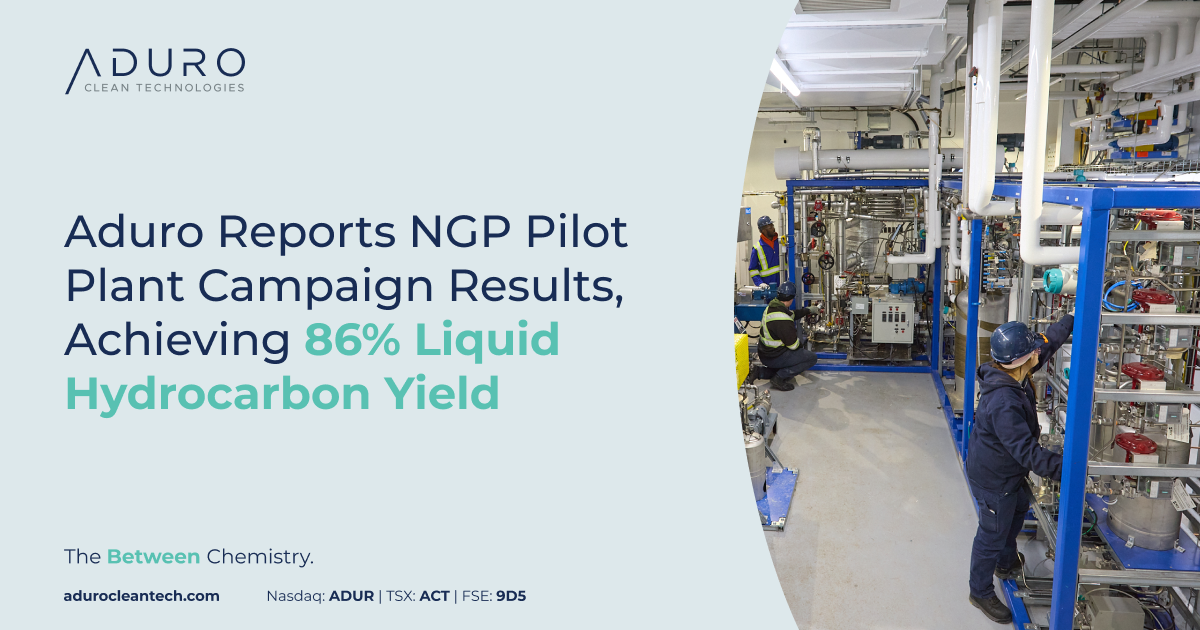
A photo accompanying this announcement is available at https://www.globenewswire.com/NewsRoom/AttachmentNg/efb24259-163e-43f6-a929-73bb8efcfd33
